Sustainable Practices at Jackson Family Wines: Leading the Way in Eco-Conscious Winemaking
Overview
Jackson Family Wines, a leader in the global wine industry, has made sustainability a cornerstone of its operations. Through its innovative Rooted for Good initiative, the company is transforming how wine brands approach environmental and social responsibility. From regenerative farming to renewable energy, their sustainable practices at Jackson Family Wines are setting a new standard.
A Legacy Rooted in the Land
Founded in 1982 by Jess Jackson, Jackson Family Wines has grown from a single California vineyard to a global portfolio of over 40 wineries, including well-known wine brands like Kendall-Jackson, La Crema, and Verité. The company’s guiding principle—'Take care of the land, and it will take care of you'—has shaped its approach to sustainability for decades. This philosophy drives their commitment to preserving ecosystems, reducing carbon footprints, and fostering community resilience.
The Rooted for Good: Roadmap to 2030 plan, launched in 2021, is their boldest step yet. It outlines ambitious goals to cut carbon emissions by 50% by 2030 and achieve climate positivity by 2050 without relying on carbon offsets. This initiative reflects a deep understanding that sustainable practices at Jackson Family Wines are not just about compliance but about leading the industry toward a greener future.

Regenerative Farming: Building Healthier Soils
One of the standout sustainable practices at Jackson Family Wines is their shift to regenerative farming. Unlike traditional methods, regenerative farming focuses on restoring soil health, capturing carbon, and boosting biodiversity. By 2030, they aim to transition 100% of their estate vineyards to this approach. For example, they use cover crops like clover and mustard to enrich the soil and reduce erosion. These crops also attract pollinators, supporting local ecosystems.
Composting is another key practice. They combine grape pomace (the leftover skins and seeds from winemaking) with animal manure to create nutrient-rich compost. This not only reduces waste but also sequesters carbon in the soil, helping combat climate change. Their Napa Valley vineyards are already organically certified, and other estates are certified sustainable, with regenerative practices being piloted across regions.
This approach isn’t just good for the planet—it improves wine quality. Healthier soils produce more resilient vines, which can better withstand drought and temperature swings. Katie Jackson, Senior Vice President of Corporate Social Responsibility, notes that regenerative techniques 'make our wines more resilient in the face of climate change,' ensuring the longevity of their wine brands. Learn more about regenerative agriculture from the University of California, Davis.
Renewable Energy: Powering Wineries Sustainably
Jackson Family Wines is the largest generator of on-site solar energy in the U.S. wine industry, with over 23,000 solar panels providing 30% of their electricity needs. This has saved them approximately $12 million and reduced emissions equivalent to removing 1,033 cars from the road annually. They’ve also invested in wind turbines, like the utility-scale turbine in Monterey, which generates surplus energy returned to the grid.
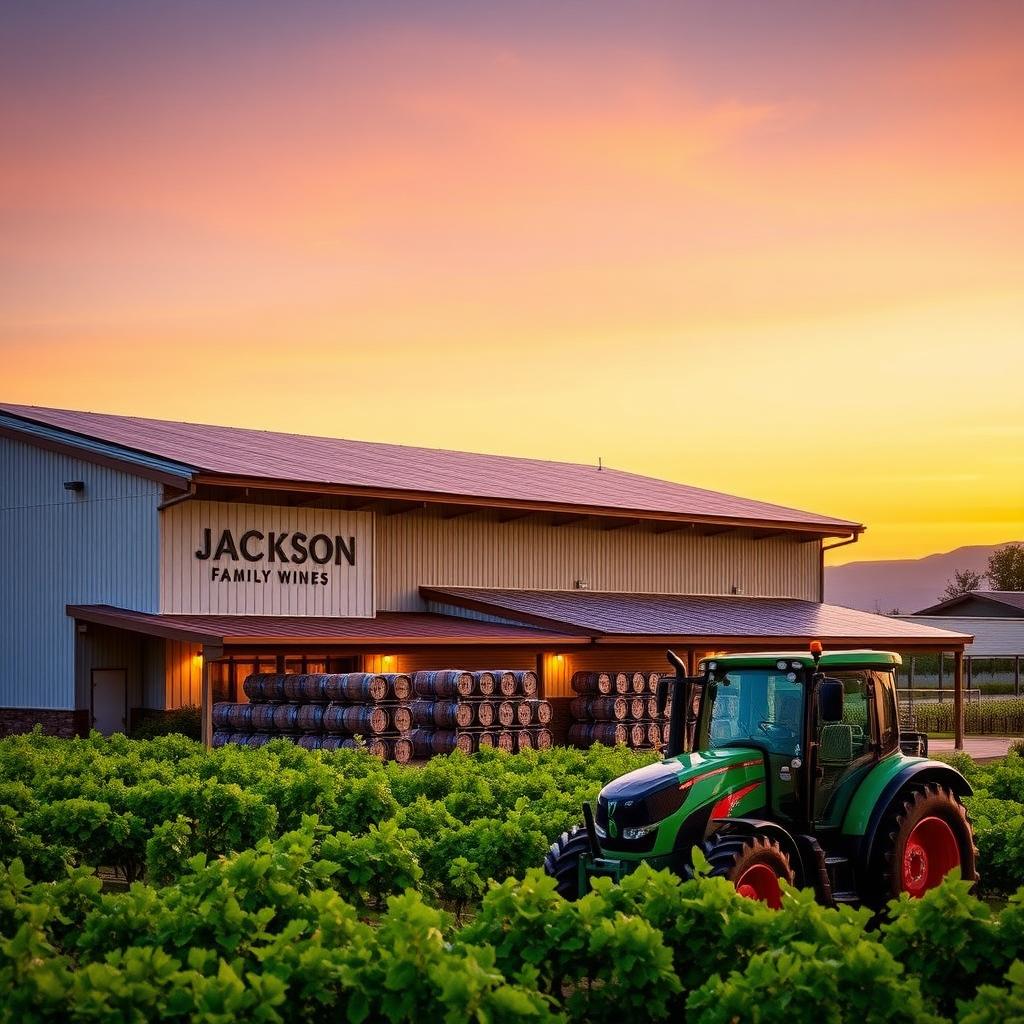
Electric vehicles and equipment, such as tractors, further reduce their reliance on fossil fuels. By optimizing transportation logistics and encouraging employee EV adoption with free on-site charging, they’re tackling emissions from multiple angles. These efforts have already cut their carbon footprint by 17.5% since 2015, a testament to their commitment to sustainable practices at Jackson Family Wines.
Smart Water Management: Conserving a Precious Resource
Water scarcity is a growing concern, especially in drought-prone California. Jackson Family Wines has reduced water use by 43% per bottle of wine produced, thanks to innovative strategies. They recycle water used for barrel cleaning, capture rainwater for irrigation, and use precision irrigation systems that monitor soil moisture to avoid waste. These systems ensure vines get just the right amount of water, improving efficiency and grape quality.
Beyond their vineyards, they partner with organizations like the National Marine Fisheries Service to protect local watersheds. By recharging groundwater aquifers during wet seasons, they help maintain water tables for future use. These efforts show how sustainable practices at Jackson Family Wines extend beyond their operations to benefit entire communities. Explore water management strategies from the California Department of Water Resources.
Reducing Packaging and Transport Emissions
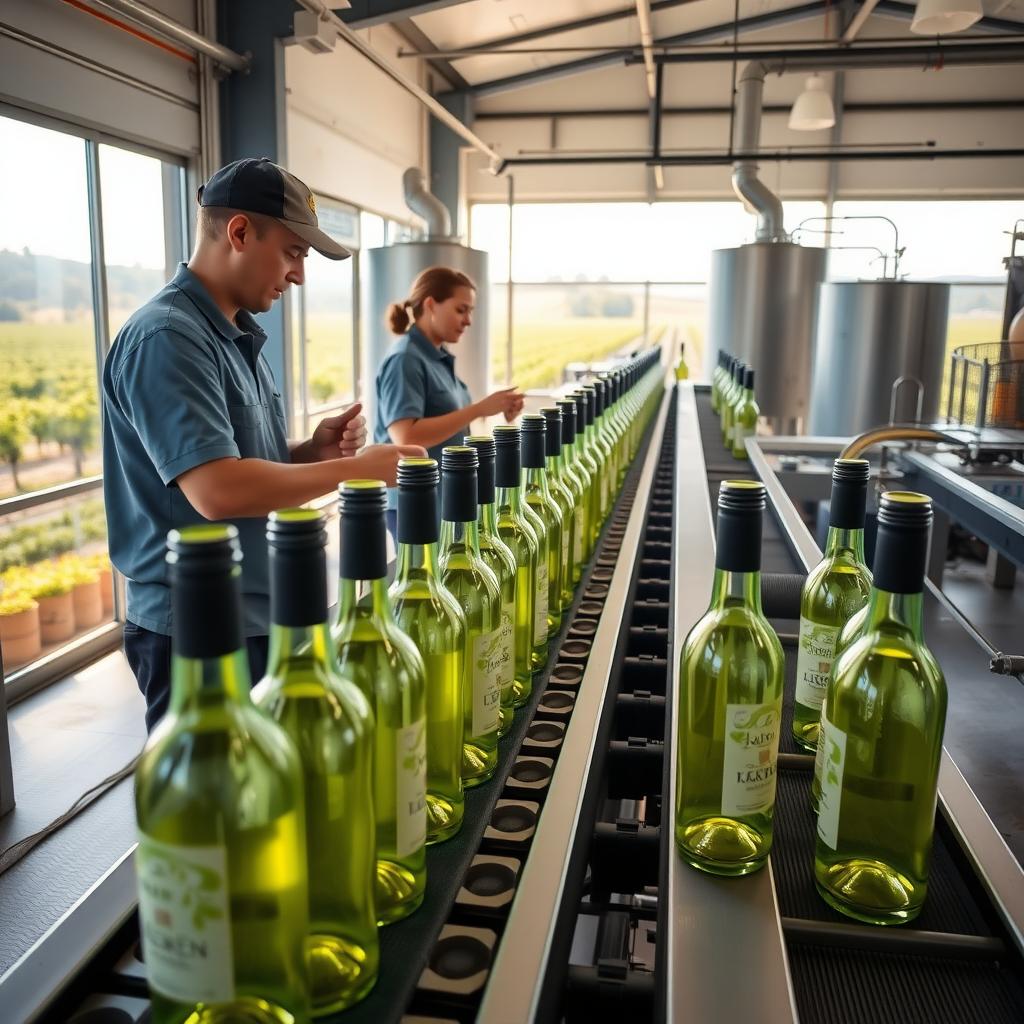
Packaging and transportation account for nearly 39% of Jackson Family Wines’ carbon footprint, with bottle weight being a significant factor. To address this, they’ve reduced the weight of bottles for four wine brands by 5%, cutting emissions by 2-3% and saving $6.5 million. They also use recyclable materials and source supplies locally to minimize transport emissions.
Bulk shipping, where wine is transported in large containers and bottled closer to markets, further reduces their environmental impact. These practical steps demonstrate how Jackson Family Wines balances profitability with sustainability, ensuring their wine brands remain eco-friendly without compromising quality.
Social Responsibility and Industry Leadership
Sustainability at Jackson Family Wines isn’t just about the environment—it’s about people, too. Their Rooted for Good plan includes fostering diversity, equity, and inclusion (DEI) within their workforce and the broader wine industry. They’ve established a DEI steering committee and employee council to ensure all voices are heard. This commitment strengthens their workplace and resonates with consumers who value ethical brands.
They also lead by example through initiatives like the International Wineries for Climate Action (IWCA), co-founded with Spain’s Familia Torres in 2019. IWCA unites wineries worldwide to decarbonize the industry, sharing best practices and research. Their virtual seminar series, moderated by wine expert Elaine Chukan Brown, educates the public and industry professionals on sustainable winemaking. Discover more about IWCA’s mission.
Challenges and Future Goals
While Jackson Family Wines has made impressive strides, they acknowledge there’s more to do. Transitioning all vineyards to regenerative farming by 2030 is a massive undertaking, requiring tailored strategies for each region’s climate and soil. Scaling renewable energy and further reducing packaging emissions also pose logistical challenges. Yet, their transparency about successes and setbacks inspires others to act.
Their investment of over $19 million in sustainability since 2015 has yielded $26 million in savings, proving that eco-conscious practices can be profitable. By sharing their journey through reports and seminars, they encourage other wine brands to adopt similar strategies, amplifying their impact across the industry.
Summary
Jackson Family Wines is redefining what it means to be a sustainable wine brand. Through regenerative farming, renewable energy, smart water management, and social responsibility, they’re not only reducing their environmental impact but also inspiring the global wine industry. Their Rooted for Good initiative is a roadmap for a greener, more inclusive future, proving that caring for the land and people goes hand in hand with crafting exceptional wines.